
Research

My Research

I study stars and exoplanets, and am particularly interested in using information about the host stars of exoplanets to form a more comprehensive understanding of their planets. As a graduate student at University of Michigan, I will be studying exoplanets around white dwarf stars. Below is a brief overview of current and past research projects that I have been involved in:

Thermal Variability of WD 1856 b

WD 1856 b is the first known exoplanet that transits a white dwarf. It was discovered by Vanderburg et al. (2020), with follow-up observations using JWST MIRI that confirm thermal emission consistent with a 185K, Jupiter-sized planet (Limbach et al. 2025). As part of my pre-candidate work at the University of Michigan with Dr. Mary Anne Limbach, I will using a second epoch of JWST MIRI data to investigate whether WD 1856 b shows signs of thermal variability and what those mechanisms are.
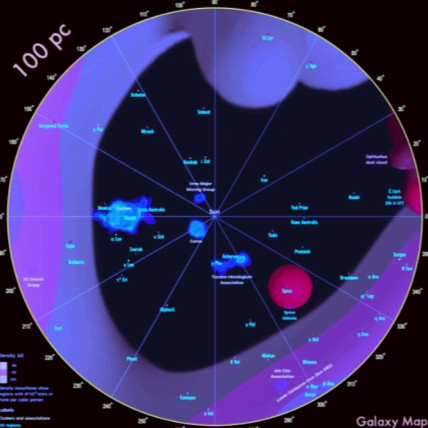
Age-dating the Ursa Major Moving Group

As an undergraduate at University of Wisconsin - Madison, I worked with Prof. Melinda Soares-Furtado to catalog and age-date the Ursa Major Moving Group (UMa). This young (~400 Myr) stellar association is known to host an Earth-sized planet around a Sun-like star (Capistrant et al. 2024). Due to their youth and proximity (we are embedded in the Ursa Major Moving Group!), these stars are great candidates for searching for additional planets. By cataloguing and refining the age of UMa, we can better contextualize the planets found around member stars. My work has involved utilizing open source codes, such as gyro-interp and wdwarfdate to better understand the ages of kinematic members and verify the age of the system through multiple independent methods.

Impacts of Binarity on Stellar X-ray Activity

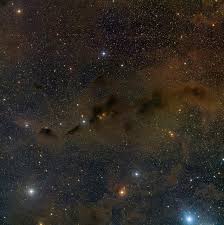
As a Lamat Fellow at the University of California - Santa Cruz, I worked with Dr. Kendall Sullivan to investigate the impact of binarity on X-ray emission in the Taurus Star Forming Region (~1-5 Myr). At this age, stars are expected to be spinning quickly enough to have saturated X-ray luminosity, and thus approximately constant normalized X-ray flux across all masses. For binary stars, deviations from this could indicate that the companion impacts stellar formation and evolution. I used data from XMM-Newton to measure the normalized X-ray flux of stars in the Taurus Star Forming Region, and compared the flux of moderate-separation binary stars to the single stars in the sample. We found evidence that moderate separation binaries may have an impact on the X-ray luminosity.